


 Login with Google
 Login with Facebook
 Login with Twitter
Thé Glacé

The Ultimate Guide to Iced Tea: Preparation and Best Teas
Craving a refreshing, healthy, and flavorful drink, but tired of sugary sodas and artificial juices? During this summer season, as we all search for the perfect thirst-quencher, iced tea stands out as the ultimate alternative. But be careful, we're not talking about those industrial bottles saturated with sugar and preservatives. We're talking about real homemade iced tea, brewed from premium tea leaves, offering an explosion of natural flavors and optimal hydration.
Preparing natural iced tea at home is a simple art that radically transforms your tasting experience. Whether you're a fan of detox iced green tea, classic peach iced black tea, or a caffeine-free iced herbal infusion, mastering the secrets of cold brewing will open the doors to a world of freshness.
In this comprehensive and definitive guide for 2026, we will explore the best brewing techniques, health benefits, and how to choose the best iced tea. To discover exceptional ingredients, feel free to visit the Inasbay store, your go-to destination for a refined lifestyle.
 Refreshing glass of homemade iced tea with ice cubes, lemon slices, and mint leaves on a wooden table.
Quick Answer: What is iced tea?
What is iced tea?
Iced tea is a refreshing beverage prepared by cooling brewed tea (hot or cold). Often flavored with lemon, peach, or mint, homemade iced tea is a healthy alternative to soft drinks. It can be made with black, green, white tea, or herbal infusions, and is ideally enjoyed without added sugar.
Why Homemade Iced Tea is Essential for Your Health
Cold tea isn't just a pleasant summer drink; it's a real asset for your health, provided it is prepared correctly.
1. Optimal Hydration Without Empty Calories
The World Health Organization (WHO) recommends drastically reducing our intake of free sugars, highlighting in its nutrition reports the dangers of sugary industrial drinks. Unsweetened or lightly sweetened iced tea allows you to stay hydrated while avoiding blood sugar spikes (the famous "sugar crash").
2. A Mine of Antioxidants (Catechins and Polyphenols)
According to in-depth studies published by the Harvard T.H. Chan School of Public Health, regular consumption of tea (whether hot or cold) is associated with a reduced risk of cardiovascular diseases. Iced green tea, in particular, is packed with EGCG (epigallocatechin gallate), a powerful antioxidant that protects your cells against oxidative stress.
3. The Fascinating History of a Global Beverage
Did you know that the popularization of iced tea dates back to the 1904 World's Fair in St. Louis? Faced with overwhelming heat, tea exhibitors had the idea of throwing ice cubes into their hot infusion to attract visitors, thus creating a global craze. The Wikipedia encyclopedia details how iced tea now represents nearly 80% of the tea consumed in the United States.
The Different Types of Tea: Which Tea to Use for Iced Tea?
To get the best iced tea, everything starts with the choice of leaves. Forget the dusty supermarket tea bags; loose-leaf tea is the key to a richly flavored infusion.
Iced Black Tea: The Great Classic
Black tea is the traditional base of the famous North American "iced tea." It offers a robust, malty liquor that holds up very well to the addition of fruits.
- Aromatic profile: Woody, full-bodied, sometimes fruity.
- Best pairings: Lemon iced tea, peach iced tea, or with a dash of maple syrup.
- Recommendation: A Ceylon black tea or a Darjeeling is perfect to avoid too pronounced a bitterness.
Iced Green Tea: Detox Freshness
Iced green tea is the refreshing drink par excellence. Unoxidized, it retains vegetal and thirst-quenching notes, perfect for scorching days.
- Aromatic profile: Vegetal, marine (for Japanese teas), floral.
- Best pairings: Mint iced tea, cucumber, lime, or fresh ginger.
- Recommendation: A quality Sencha or Gunpowder tea. Be careful not to brew it too hot to avoid astringency.
Iced White Tea: Floral Delicacy
Often overlooked, white tea makes a premium iced tea of incredible subtlety. Low in caffeine and rich in antioxidants, it offers naturally sweet notes.
- Aromatic profile: Mild, floral, notes of honey and melon.
- Best pairings: Fresh raspberries, lychee, white peaches.
Iced Herbal Tea (Iced Herbal Infusion)
If you are looking for a caffeine-free iced tea for the whole family, turn to herbal infusions. Hibiscus (bissap), rooibos, or chamomile make extraordinary summer drinks.
- Aromatic profile: Tart (hibiscus), sweet and woody (rooibos).
- Best pairings: Red berry iced tea, citrus, or mild spices.
 Selection of premium quality loose tea leaves in wooden bowls for the preparation of natural iced tea.
How to Make Homemade Iced Tea: The 2 Foolproof Methods
The preparation of artisanal iced tea relies on mastering the infusion. Here are the methods favored by experts to make the best iced tea at home.
Method 1: Cold Infusion (Cold Brew Tea)
Cold infusion is the queen of methods, particularly recommended by tea sommeliers in 2026. Why? Because cold water extracts mild flavors, L-theanine, and antioxidants, while leaving behind the tannins responsible for bitterness. The result: a naturally fragrant and sweet tea.
How to prepare a cold brew tea infusion (Steps):
- The dosage: Place 10 to 15 grams of loose-leaf tea (about 3 to 4 tablespoons) in a pitcher.
- The water: Pour 1 litre of cold or room temperature water (ideally filtered).
- The infusion: Place the pitcher in the refrigerator.
- Brewing time:
- Green or white tea: 4 to 6 hours.
- Black or Oolong tea: 8 to 12 hours.
- Herbal tea (Tisanes): 12 to 24 hours.
- Filtration: Strain the leaves and serve with tea ice cubes (to avoid diluting the drink).
Method 2: Hot Infusion (Rapid Cooling)
Need a refreshing iced tea immediately? The hot method is for you. The secret is to make a tea that is twice as concentrated, because the ice cubes will dilute it.
How to make traditional iced tea quickly:
- The infusion: Heat 500 ml of water (80 °C for green tea, 95 °C for black tea).
- Strong dosage: Steep 15 grams of tea for the recommended time (usually 3 to 5 minutes).
- Filtration and sweetening: Remove the leaves. If you wish to add a sweetener (honey, agave syrup), do it now while the tea is hot.
- Thermal shock: Pour the hot infusion directly into a large pitcher filled with 500 grams of ice cubes. Stir vigorously.
5 Pro Tips for Delicious, Bitter-Free Iced Tea
To succeed in your cold tea recipe every time, here are the experts' tips:
- Use whole-leaf tea: Commercial bags often contain tea "dust" (fannings), which releases its tannins very quickly, causing bitterness. Loose-leaf tea from the Inasbay tea collection guarantees a slow and controlled extraction.
- Manage bitterness (How to prevent iced tea from becoming bitter?): The number one secret is to never squeeze the bags or leaves after hot infusion, and to strictly respect the brewing time and water temperature.
- Make flavored ice cubes: To avoid diluting your tea drink, freeze leftover iced tea in an ice cube tray. You can include pieces of fruit or mint leaves in it.
- Add fruit at the right time: If you are making fresh fruit iced tea, add the fruit pieces (peaches, berries, citrus slices) after the infusion and let them macerate in the fridge for a few hours.
- Use baking soda: An old trick from the American South is to add a tiny pinch of baking soda (1/8 teaspoon) during the hot infusion to neutralize acidity and obtain a tea of perfect clarity.
 Elegant glass carafe containing a cold brew of red berry and citrus iced tea, surrounded by fresh raspberries.
The Best Natural Iced Tea Recipes
Wondering what the best iced tea flavors are? Here are three essential recipes to prepare this summer.
1. Authentic Peach and Thyme Iced Tea (Sugar-Free)
- Base: Ceylon black tea.
- Preparation: Cold brew 15 g of black tea in 1 litre of water for 8 hours.
- Addition: Lightly crush 2 ripe yellow peaches and add them to the pitcher with 3 sprigs of fresh thyme. Let rest for an additional 2 hours in the fridge, strain, and enjoy.
2. Mint and Lime Iced Green Tea (Summer Detox)
- Base: Gunpowder or Sencha green tea.
- Preparation: Use the hot infusion method with 500 ml of water at 75 °C. Steep for 3 minutes.
- Addition: Pour over ice cubes. Add the juice of one freshly squeezed lime and a large handful of fresh mint leaves. A true alternative to mojito-style non-alcoholic soft drinks.
3. Tropical Iced Infusion (Caffeine-Free)
- Base: Hibiscus and rosehip infusion.
- Preparation: Hot brew (100 °C) for 10 minutes to extract the beautiful red color, then cool over ice.
- Addition: Add pieces of fresh pineapple and a few orange slices. The perfect tropical iced tea for kids.
Comparison: Homemade Iced Tea vs. Commercial Iced Tea
The ready-to-drink beverage industry weighs in at billions, but what do these bottles really contain? According to data from the Statista study on the iced tea market, the demand for natural alternatives is exploding, and for good reason:
| Features | Homemade Iced Tea (Cold Brew) | Commercial Iced Tea (Supermarket) |
| Sugar content | 0 g to 5 g (depending on your additions) | 20 g to 35 g per bottle (equivalent to sodas) |
| Ingredients | Water, real tea leaves, fresh fruits | Water, tea extracts, corn syrup, artificial flavors |
| Antioxidants | Very rich (preserved by brewing) | Low to non-existent (destroyed by pasteurization) |
| Cost per litre | Economical (around $0.50 - $1.50) | Expensive (around $3.00 - $5.00) |
| Environmental impact | Low (compostable loose-leaf tea) | High (single-use plastic bottles) |
It is obvious that preparing your own iced tea blend is a winner across the board: health, budget, and ecology.
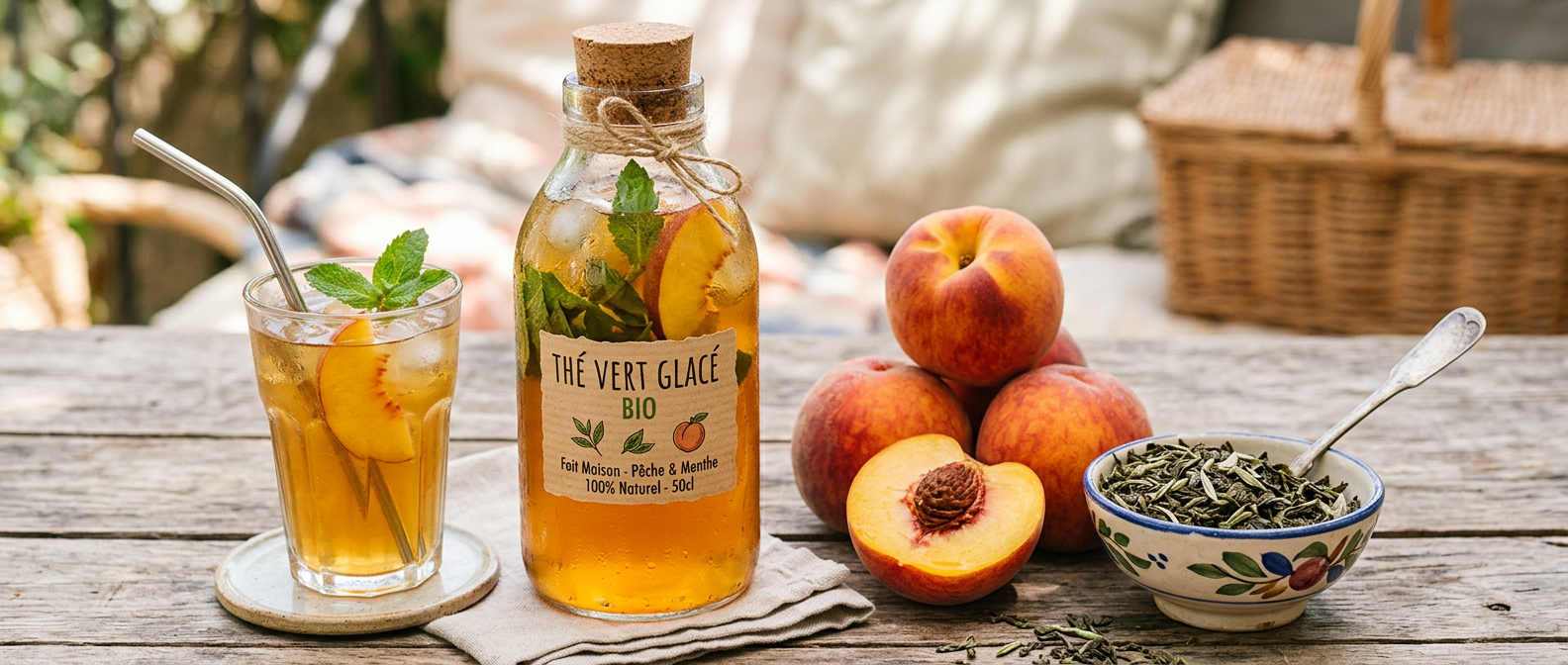 Glass bottle of homemade organic iced green tea placed next to juicy fresh peaches and loose tea leaves.
2026 Trends: The Future of Cold Tea
In 2026, the premium iced tea industry is experiencing a revolution focused on functional wellness. The concept of a "refreshing drink" is evolving.
- The boom of Cold Brew Tea: Consumers are moving away from hot infusion in favor of cold infusion, recognized for maximizing the natural sweetness of specialty teas.
- The integration of adaptogens: We are seeing the emergence of iced teas infused with ginseng, ashwagandha, or holy basil, offering a summer drink that also helps manage stress.
- The "Sugar-Free" revolution: The best sugar-free iced tea is no longer bland. The expert use of naturally sweet herbs like licorice or freeze-dried fruits makes it possible to create complex aromatic profiles without the addition of sweeteners.
Buying Guide: Where to Buy Tea for Making Iced Tea?
The secret to a successful non-alcoholic drink lies in the quality of the ingredients. Do not choose a low-end tea under the pretext that you are going to drink it cold. On the contrary, cold reveals the subtleties of the product.
To find the best tea for making iced tea, favor specialized retailers who offer whole leaves, ideally certified organic. Are you looking for a blend specifically designed for cold brewing?
Strategic Action: Explore our online catalogue to find the best blend for premium iced tea. Whether you are looking for a citrus iced tea, a classic black tea, or a delicate green tea, Inasbay's quality standards guarantee an unforgettable tasting experience.
Key Points
To summarize this guide, here are the crucial elements to remember to succeed in your natural iced tea:
- Quality above all: Use whole-leaf tea (loose-leaf) rather than bags to avoid bitterness and release real flavors.
- The queen method: Cold infusion (Cold Brew) is the best technique to obtain a mild iced tea, without added sugar and rich in antioxidants.
- Cold brewing time: 6 h for green/white tea, 12 h for black tea, up to 24 h for herbal infusions.
- Perfect ratios: Count about 10 to 15 grams of tea for 1 litre of water.
- Health: Homemade iced tea is the healthiest, most hydrating, calorie-free, and antioxidant-rich alternative to soft drinks.
 Assortment of elegant glasses filled with different artisanal iced teas (red, amber, green) served on a sunny summer day.
Frequently Asked Questions
How to make homemade iced tea?
To easily make homemade iced tea, use cold infusion: place 15 g of loose-leaf tea in 1 litre of cold water. Let it steep in the refrigerator between 6 and 12 hours, depending on the tea, strain, and serve over ice cubes with slices of fresh lemon.
How long does it take to brew iced tea?
If you brew it hot, respect the usual time (3 to 5 minutes), then cool it suddenly with ice cubes. For a cold brew, count 4 to 6 hours for green or white tea, and 8 to 12 hours for black tea.
What is the best tea for a cold brew?
The best tea for cold brewing is a white tea or a green tea (like Sencha or Jasmine), because cold water extracts its floral and sweet notes while blocking bitterness. Fruity black teas (peach, mango) also work wonderfully.
How to prevent iced tea from becoming bitter?
For a cold tea without bitterness, never squeeze the tea leaves after infusion. Prefer cold water infusion over hot water, use high-quality whole-leaf tea (loose-leaf), and strictly respect the recommended brewing times.
Does iced tea contain caffeine?
Yes, if it is prepared from real tea (black, green, or white), iced tea contains caffeine. However, cold infusion extracts slightly less caffeine than boiling water. For a caffeine-free iced tea, opt for infusions based on rooibos or hibiscus.
How much tea to use for a litre of iced tea?
To obtain a litre of flavorful iced tea, it is recommended to use between 10 and 15 grams of loose-leaf tea, which corresponds to about 3 or 4 tablespoons of dry leaves. Adjust this amount according to the desired intensity.
Can iced tea be prepared the night before?
Absolutely. Preparing iced tea the night before is even the ideal method for cold infusion. You place your water and tea mixture in the refrigerator in the evening, and you get a perfectly brewed, fresh tea ready to drink the next morning.
How long does homemade iced tea keep?
A homemade iced tea prepared with filtered water keeps very well in an airtight container (closed pitcher) in the refrigerator for 3 to 4 days. If it contains cut fresh fruits, it is best to consume it within 48 hours.
Conclusion
Iced tea is much more than just a drink to cool off in the summer. It is an extraordinary culinary playground, a powerful ally for your health, and a sophisticated drink that can adapt to all your desires. By ditching industrial products to concoct your own homemade iced tea based on cold infusion, you take back control over your hydration by eliminating unnecessary sugars, without making the slightest compromise on taste.
Whether you are seduced by the elegance of a white peach iced tea, the liveliness of a mint-lime green tea, or the classic comfort of a flavored iced black tea, the key to success lies in the quality of the leaves you choose.
Don't wait any longer to transform your summer afternoons. Discover exceptional flavors, browse our rigorous selection of loose-leaf teas, and elevate your tasting experience by exploring the refined universe of Inasbay. It is the ideal time to prepare the best iced tea of your life!
 |
Share


|